
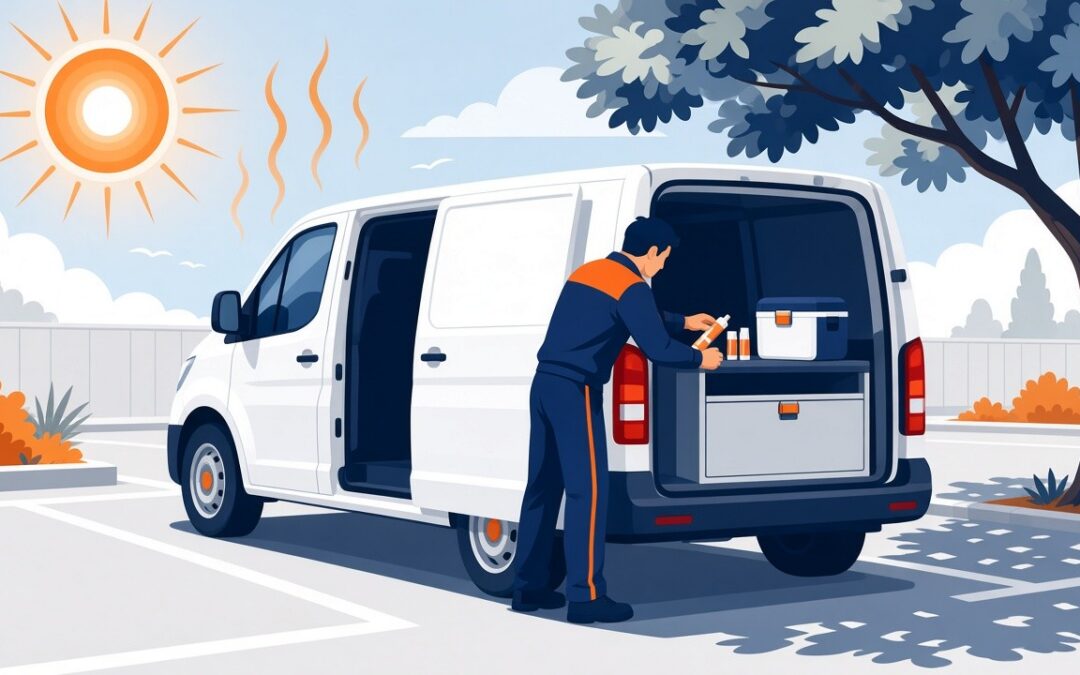
To protect heat-sensitive parts and materials in service trucks, check the manufacturer’s storage guidance for anything you carry, keep sensitive items in the coolest, shadiest part of the truck, carry smaller quantities so they turn over quickly, and rotate older stock out first. Parking in the shade when possible helps too.
Summer is hard on truck stock. A closed van sitting in the sun gets much hotter inside than the air outside, and some of what you carry doesn’t handle that well. Adhesives, sealants, some batteries, and certain chemicals can lose quality or fail early. The result is a part that looks fine but doesn’t perform, which is worse than not having it at all. This fits right in with the seasonal planning we covered in managing seasonal rotations.
Items Worth Checking
Every product is different, so always go by the manufacturer’s label and data sheet. These are common categories worth a closer look:
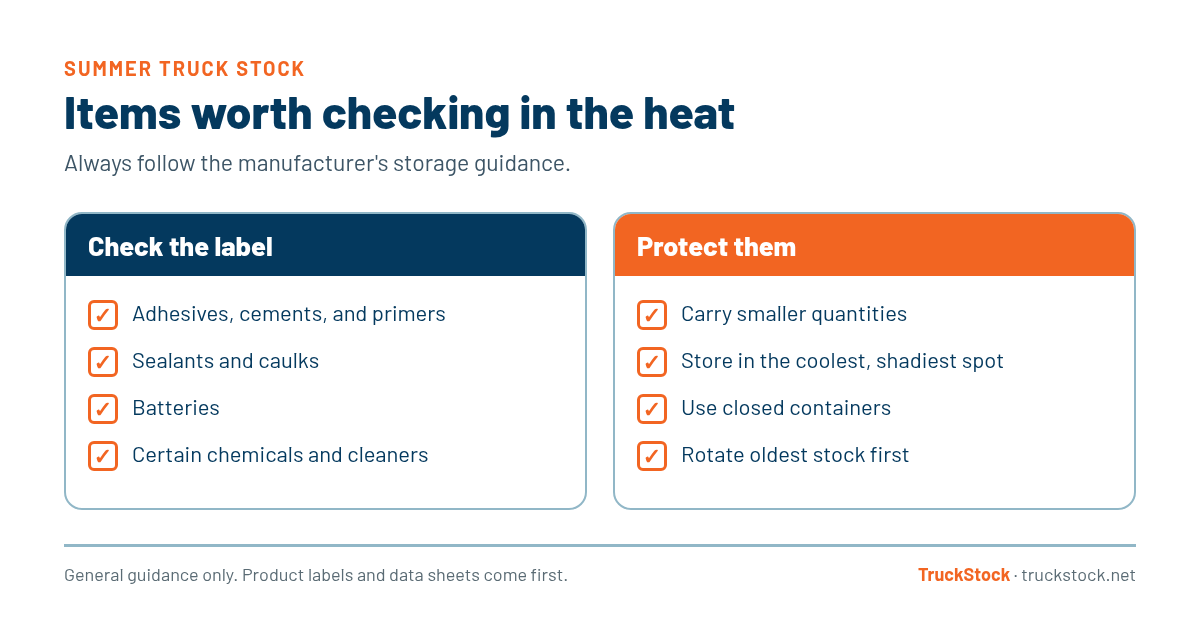
How to Protect Truck Stock in the Heat
1. Read the storage guidance
Go through the items on your truck lists and check the storage temperature guidance on the label or data sheet for anything that might be sensitive. Make a short list of the items that need special care. Most of your parts won’t be on it, and that’s fine.
2. Carry less, more often
For sensitive items, lower the max on the truck so stock turns over quickly and doesn’t sit in the heat for weeks. Keep the rest in the stockroom, which is usually cooler. Here’s how to set min and max levels.
3. Use the coolest spot
Some areas of a truck stay cooler than others. Lower shelves, enclosed cabinets, and spots away from windows and the roof tend to fare better. Put sensitive items there and keep them in closed containers.
It also helps to think about where the truck spends its day. A truck parked in full sun at a job site for hours gets hotter than one that’s moving between short calls. When you can, park in the shade or crack a vent, and avoid leaving sensitive items on the dash or seats.
4. Rotate stock
Use older stock first, and check dates on items that have them. When you restock, put the new items behind the old ones so the oldest gets used first.
5. Follow the rules for regulated items
Some items, like refrigerant and other pressurized cylinders, have specific handling and storage rules. Follow the manufacturer’s instructions and any regulations that apply in your area.
A Quick Example
Picture a plumbing van carrying a full case of PVC cement and primer all summer because it was easier than restocking. By August, some of those cans may have sat in a hot van for months. Carrying a couple of cans and topping them off from the stockroom every week keeps the product fresher and frees up space for parts that actually need to ride along.
Common Mistakes
- Assuming every part handles heat the same way.
- Carrying large quantities of sensitive items that sit for weeks.
- Storing sensitive items near the roof or in direct sun through windows.
- Restocking new items in front of old ones.
- Ignoring manufacturer storage guidance.
How TruckStock Handles It
- Seasonal max levels. Lower the max on sensitive items for summer on each truck type so trucks carry less of them.
- Frequent top-ups. Techs can request a top-up to replenish stock, so small quantities get refilled regularly from the stockroom.
- A max of 0. If an item shouldn’t ride on a truck type at all in summer, set its max to 0.
- Usage reports. See which sensitive items actually get used on each truck so you can size quantities right.
Key Takeaways
- Check manufacturer storage guidance for items you carry.
- Carry smaller quantities of heat-sensitive items in summer.
- Store sensitive items in the coolest part of the truck.
- Rotate older stock out first.
- Follow the rules for regulated items like cylinders.
Frequently Asked Questions
Which service truck items are most sensitive to heat?
It varies by product, but adhesives, cements, sealants, some batteries, and certain chemicals are common ones to check. The manufacturer’s label is the final word.
Is it worth adding shelving or cabinets to protect parts?
Enclosed cabinets can help keep items out of direct sun and organized. Whether it’s worth it depends on what you carry and how hot your summers get.
Should I move sensitive items to the stockroom for summer?
For items you don’t use often, yes. Keep a small amount on the truck and the rest in the stockroom, which is usually cooler.
Does cold weather cause problems too?
It can. Some products have minimum storage temperatures as well, so check the guidance for winter too.
Want to adjust truck stock by season with less hassle? Start a free TruckStock trial or contact our team.
Recent Comments