
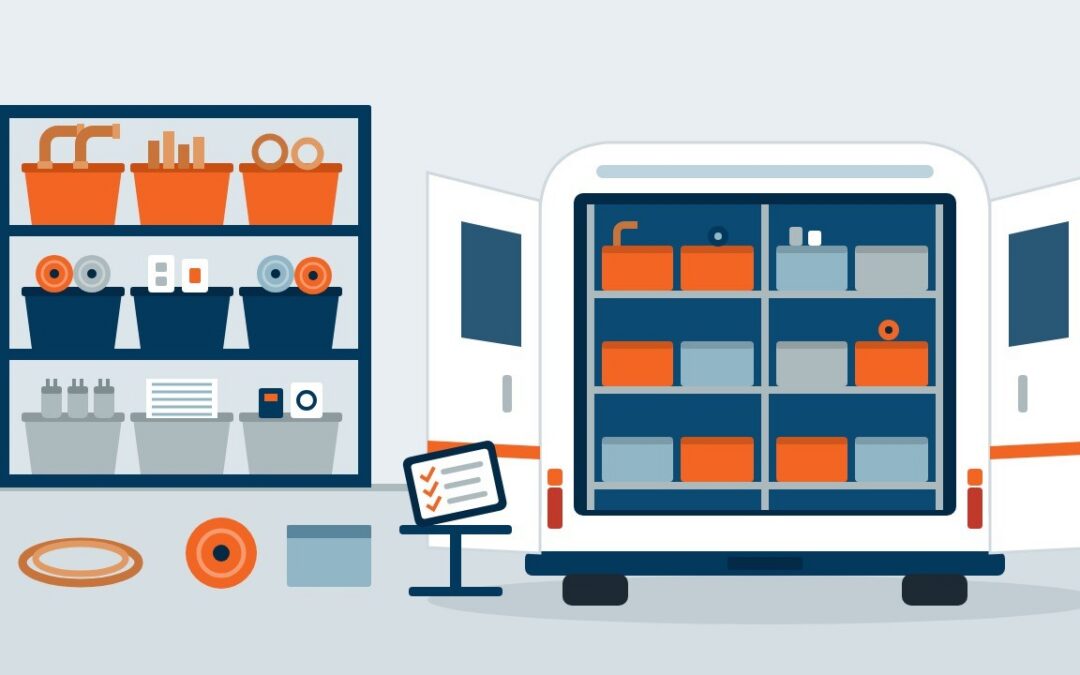
Give each trade its own truck type, with its own parts list and max levels, instead of piling plumbing or electrical parts onto your HVAC trucks. Set up the parts catalog and stockroom space for the new trade before the first call, start with a lean list, and adjust it from what your techs actually use in the first few months.
More HVAC shops are weighing this move. In More Trades, More Opportunities for HVAC Contractors, published October 20 in ACHR News, Matt Jachman reports on a survey of nearly 800 homeowners: 48% said they would be more likely to hire an HVAC contractor that also offers electrical services, and 44% said the same about plumbing. Craig Ouimette of Cardinal Heating, Cooling, Plumbing & Electric says pricing, inventory, dispatching, and marketing should all be in place before a new service goes public.
Truck stock is the piece that’s easiest to underestimate.
Why a New Trade Changes Your Truck Stock
- Different parts. Plumbing and electrical calls use very few of the same parts as HVAC calls.
- New suppliers. You may be buying from a supply house you’ve never used, with its own part numbers.
- Slow early volume. Calls for a new service take time to build, so a big starting load can turn into dead stock.
Five Steps to Stock Trucks for a New Trade
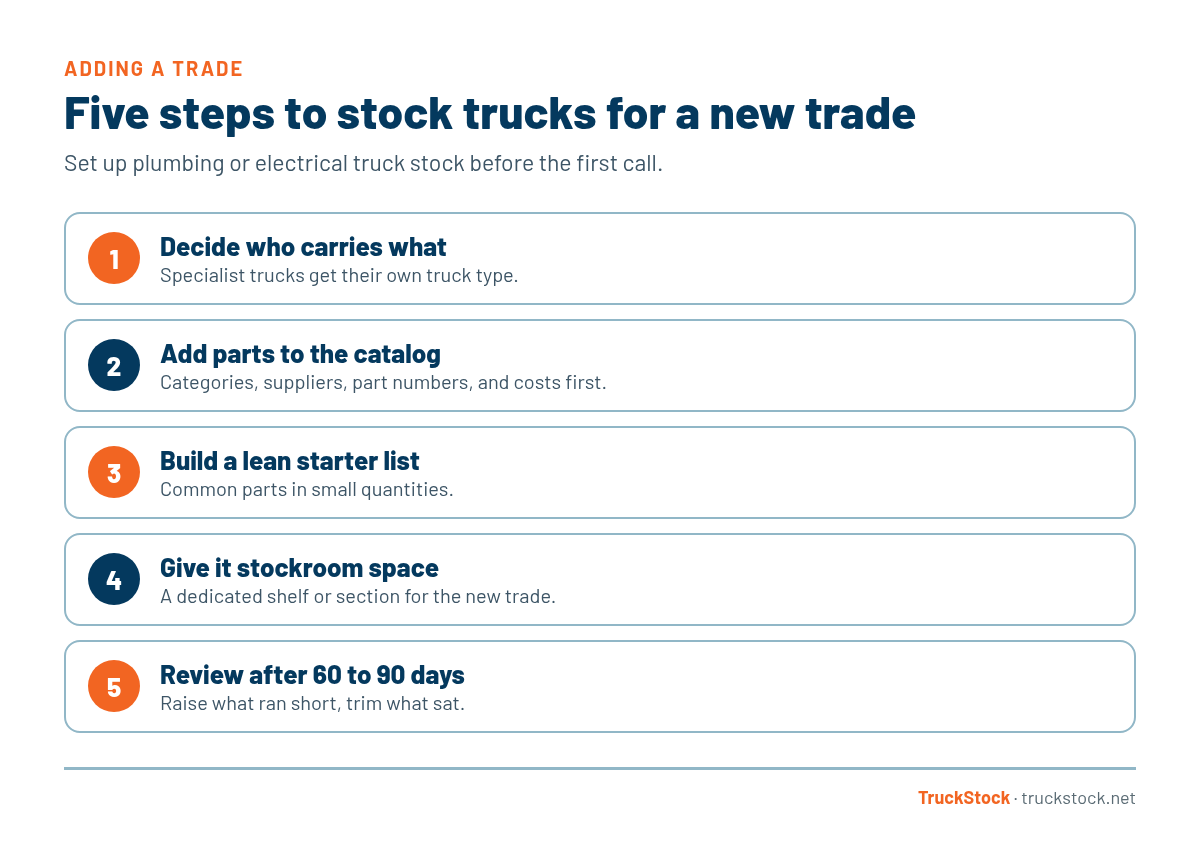
1. Decide who carries what
If your plumbers and electricians will be specialists, give each trade its own truck type. Chris Parham of Parham Heating, Cooling, Plumbing & Electric told ACHR News his company typically leaves techs in their own trade. If an HVAC tech will also handle small plumbing jobs, make a separate truck type for that combination instead of editing trucks one at a time.
2. Add the new parts to your catalog first
Create categories for the new trade, then add each part with its supplier, part number, and cost before anyone requests it. See how to organize a parts catalog and how to manage supplier part numbers and costs.
3. Build a lean starter list
Start with the parts your new techs use on most calls, in low quantities. Our plumbing van starter stock list and our post on electrical service truck inventory are good places to begin. It’s easier to raise a max later than to pull parts that never move.
4. Give the new trade its own stockroom space
A dedicated shelf or section keeps restocking quick and parts from getting mixed in. Here’s how to set up a stockroom for fast restocking.
5. Review usage after the first few months
After 60 to 90 days, look at what each new truck actually used. Raise max levels on parts that ran short, and lower or remove the ones that sat. Our guide to setting min and max levels walks through it.
Trade-Specific Parts vs. Shared Parts
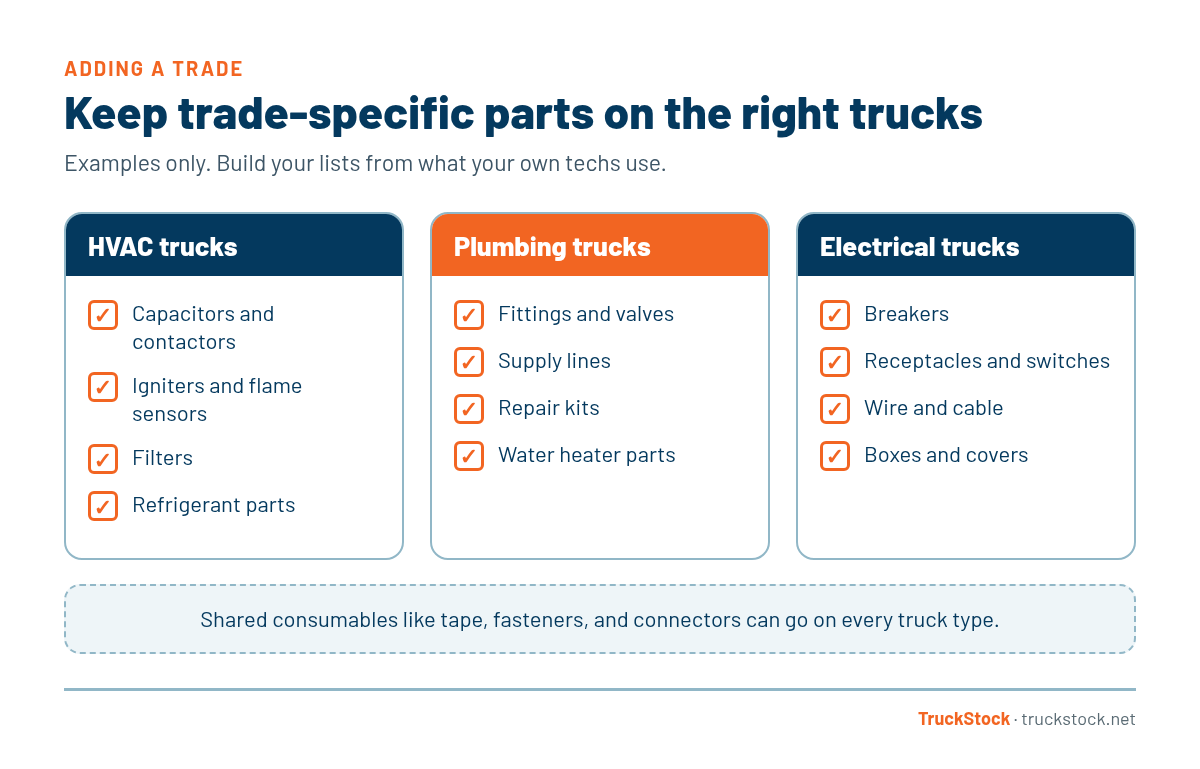
For more on keeping many trucks of different types organized, see multiple users and multiple truck types.
A Quick Example
Picture an HVAC company that hires its first two plumbers. Before their first call, the office adds a Plumbing category with the new supply house’s part numbers and costs, and sets up a plumbing truck type with a short list. Both vans start from that list, and the parts get their own stockroom shelf. Three months later, the usage report shows which fittings ran out and which repair kits never moved, so the manager adjusts the list once and both vans follow.
Common Mistakes
- Adding plumbing or electrical parts to every HVAC truck “just in case.”
- Letting new techs build their own truck lists with no review.
- Loading new trucks heavily before call volume is there.
- Skipping the catalog setup, so requests show up with no part numbers or costs.
How TruckStock Helps
- Truck types. Set a parts list and max levels for each kind of truck. Change it once, and every truck of that type follows.
- Part categories and suppliers. Keep each trade’s parts organized, with supplier part numbers and costs.
- Departments. Label requests by trade so you can report on each one separately.
- Items Requested report. Group by department, part, or truck to see what each trade actually uses.
Key Takeaways
- Give each trade its own truck type and parts list.
- Set up the catalog and suppliers before the first call.
- Start new trucks lean, because call volume takes time to build.
- Keep the new trade’s parts in their own stockroom space.
- Review usage after 60 to 90 days and adjust max levels.
Frequently Asked Questions
Should my HVAC trucks carry plumbing or electrical parts too?
Usually not, unless your HVAC techs are trained and licensed to do that work. If some are, set up a separate truck type for those trucks so the rest of your HVAC fleet stays lean.
How much should a new plumbing or electrical truck carry at first?
Start with the parts your new techs use on most calls, in small quantities. Raise max levels as you see real usage over the first few months.
Do I need a separate stockroom for a new trade?
Not a separate building. A dedicated shelf or section is usually enough to keep restocking fast and parts from getting mixed up.
How do I see whether the new trade’s truck stock is working?
Track requests by trade, then compare what each truck used against its list. Our post on measuring your truck stock process has more ideas.
Adding a trade? Get your truck types and parts lists set up from day one. Start a free TruckStock trial or contact our team.
Recent Comments