
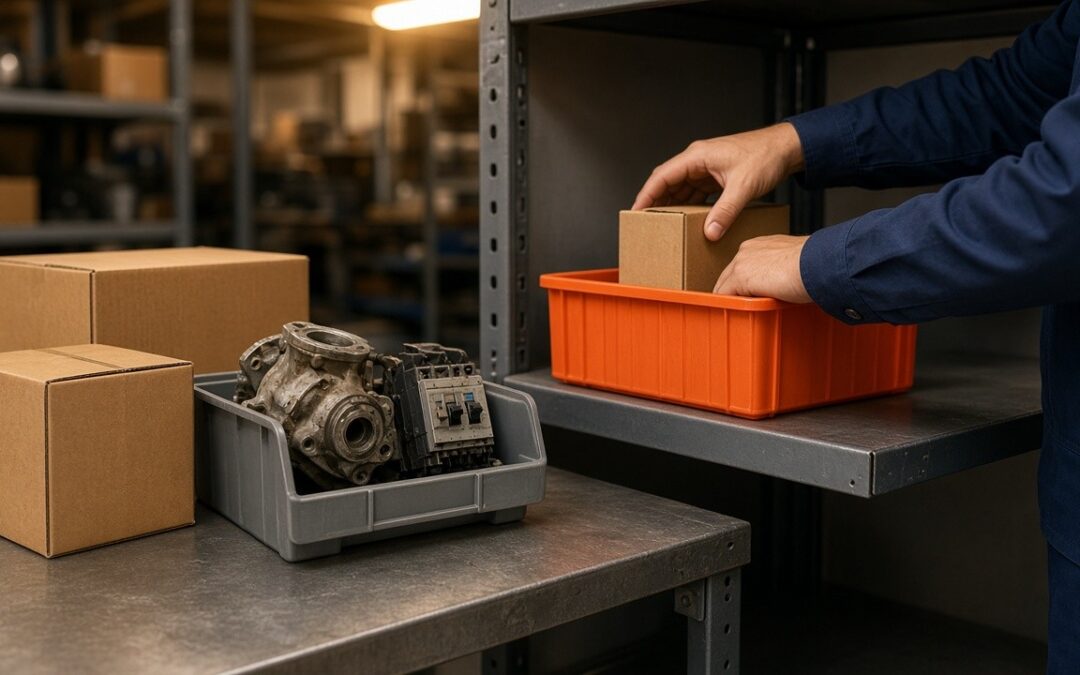
To handle returns and defective parts from service trucks, have techs bring them back to one clearly marked returns spot, record each one so truck and stockroom counts stay accurate, and keep defective parts separate from good stock. Then process warranty claims and supplier returns on a regular schedule so nothing sits for months.
Returns are easy to ignore. A defective motor rides around in the back of a van for weeks. An unused special-order part ends up in the stockroom with no record. A warranty claim never gets filed because nobody kept the part. Each one is a small loss, but together they quietly throw off your counts and leave money on the table. A little structure fixes most of it, and it helps with the gaps we covered in reducing lost and missing parts.
Three Kinds of Returns

How to Handle Returns, Step by Step
1. Pick one returns spot
Choose a single, clearly marked place in the stockroom for everything coming back off trucks. Separate it into good parts and defective parts. When techs know exactly where returns go, they stop piling up on trucks and in random corners.
2. Record what comes back
If a good part goes back to the stockroom, the truck count should go down and the stockroom count should go up. If a part is defective, note what it is, which job it came from, and why it failed. Without a record, your counts drift and warranty claims get harder.
3. Tag defective parts
Attach a simple tag with the job number, date, and the problem. Many warranty processes need that information, and it’s much easier to write down at the job than to reconstruct a month later.
4. Process returns on a schedule
Pick a day each week or every other week to go through the returns spot. Restock good parts, file warranty claims, send supplier returns, and toss anything that has no value. A regular rhythm keeps returns from becoming a pile nobody wants to touch.
Put someone’s name on it. Returns processing is one of those jobs that everyone agrees is important and nobody actually does unless it’s clearly theirs. Even fifteen minutes on a set day is enough for most small fleets.
5. Watch for patterns
If the same part keeps failing, or the same special orders keep coming back unused, that’s worth a closer look. It might be a quality issue, a supplier issue, or a sign your stock list needs adjusting. Our post on reporting on parts usage covers how to spot trends.
A Quick Example
Say a tech replaces a failed blower motor that’s still under warranty. If the old motor gets tagged with the job number and dropped in the defective bin, the office can file the claim the same week. If it rides around in the van and eventually gets tossed, the claim never happens. The difference is a two-minute habit.
Common Mistakes
- Letting returns ride around on trucks for weeks.
- Mixing defective parts back in with good stock.
- Not recording returned good parts, so counts drift.
- Throwing away failed parts that could have gone to a warranty claim.
- No regular time set aside to process returns.
How TruckStock Handles It
- Adjust truck counts. Admins can edit a truck’s inventory directly when parts come off the truck as returns.
- Stockroom inventory. Stockroom counts can be viewed and edited, so returned good parts go back into stock with a record.
- Job numbers on requests. Replacement parts are recorded against a job number, which makes it easier to match a failed part to the job it came from.
- Bulk updates. For bigger cleanups, download inventory to Excel, update it, and upload it back with a review step.
Key Takeaways
- Use one clearly marked returns spot, split into good and defective.
- Record every return so truck and stockroom counts stay right.
- Tag defective parts with the job, date, and problem.
- Process returns on a regular schedule.
- Watch for parts that fail or come back often.
Frequently Asked Questions
Should techs keep defective parts on the truck?
Only until they get back to the shop. Defective parts take up space and get lost. Bring them to the returns spot at the next stop.
How do I keep returned parts from messing up my counts?
Record each return when it comes off the truck and when it goes back into stock. That way the truck and the stockroom both reflect what really happened.
How often should returns be processed?
Every week or two works for most fleets. The key is a regular time so returns never pile up.
What information do warranty claims usually need?
It varies by manufacturer and supplier, but job number, install and failure dates, and the part details are a good start. Check each supplier’s requirements.
Want cleaner counts on every truck? Start a free TruckStock trial or contact our team.
Recent Comments