
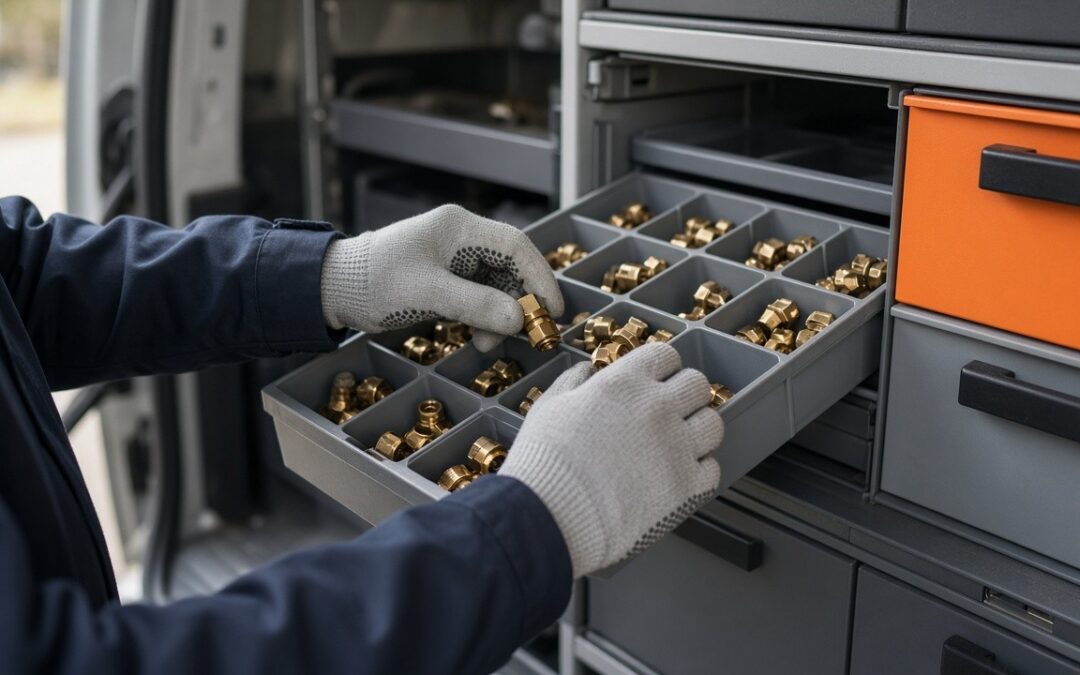
To reduce lost and missing parts on service trucks, record every time a part moves, have techs confirm every restock they receive, give each truck one responsible owner, and spot-check counts regularly. Most “lost” parts aren’t stolen. They were used, borrowed, or delivered without anyone writing it down.
That’s good news, because it means the fix is mostly process. When every movement has a record and a name attached, gaps get smaller and easier to explain. And when a gap does show up, you can usually trace it back in minutes instead of guessing.
It also changes the conversation with your team. When techs know the goal is accurate records and not blame, they’re much more likely to speak up when something doesn’t add up. That honesty is what makes the rest of the process work. A shop where people hide gaps will never get its counts right, no matter what tools it uses.
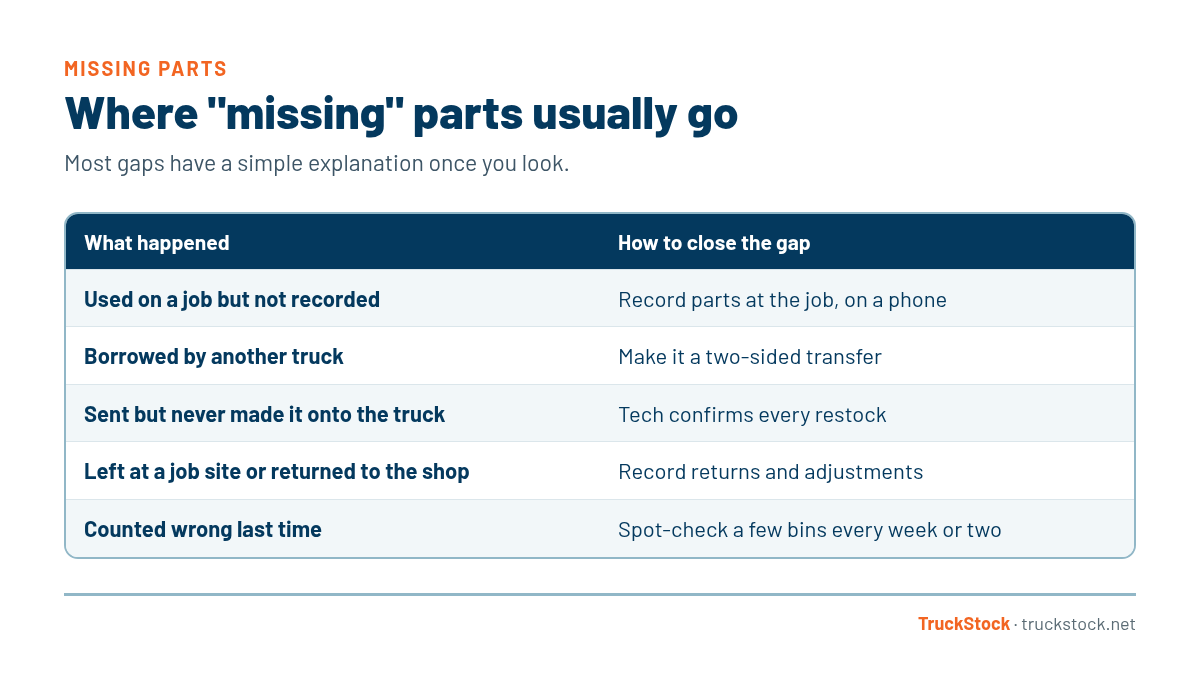
Where Missing Parts Usually Go
How to Cut Down on Missing Parts
1. Record usage at the job
The biggest source of “missing” parts is parts that were used but never recorded. Make recording quick, on a phone, right after each job. Our post on faster operation through smart inventory processes covers why logging every use matters.
2. Confirm every restock
When parts are sent to a truck, the tech should confirm what actually arrived. If the stockroom sent six and the tech received five, you know right away, not three weeks later.
3. Make borrowing official
Techs help each other out. That’s fine, as long as it’s recorded as a transfer with a sender and a receiver. Here’s more on tracking parts across multiple trucks.
4. Give every truck one owner
When everyone is responsible for a truck, nobody is. Assign one person to each truck’s count, even if others drive it sometimes.
The owner doesn’t have to do every count. They just make sure the truck’s records are right, flag problems early, and know who to call when something doesn’t match. For trucks that are shared between shifts, a quick handoff check at the start of each shift helps a lot.
5. Spot-check and follow up
Pick a few bins on each truck every week or two and compare them to the record. When something’s off, follow up while people still remember. A full count once or twice a year fills in the rest. Here’s how to do a full inventory count.
Keep spot-checks short and routine so they don’t feel like an investigation. Five minutes at the start of a shift, a handful of bins, and a quick note of anything that’s off. Done regularly, that catches far more than a big annual count ever will.
Common Mistakes
- Treating every gap as theft, which hurts trust and usually misses the real cause.
- Letting parts leave the stockroom without a record of which truck they went to.
- Allowing informal swaps between trucks.
- Never confirming what actually arrived on the truck.
- Only counting once a year, when it’s too late to trace gaps.
How TruckStock Handles It
- Every step has a name. Techs request, managers fulfill, and techs receive, so each movement is tied to a person and a truck.
- Receiving can’t exceed what was sent. Techs confirm what arrived, and the truck count updates automatically.
- Two-sided transfers. One tech sends, the other accepts, so a borrowed part never disappears between trucks.
- Responsible person per truck. Each truck can have an owner, and the Items Requested report shows usage by truck, job, and part.
Key Takeaways
- Most missing parts were used, borrowed, or delivered without a record.
- Record usage at the job and confirm every restock.
- Make borrowing between trucks a recorded transfer.
- Give each truck one responsible owner.
- Spot-check often and follow up quickly.
Frequently Asked Questions
How do I know if parts are being stolen or just not recorded?
Start by tightening the recording process. If gaps shrink once usage, restocks, and transfers are recorded, the problem was process. If a gap keeps showing up on one truck or one part after that, it’s worth a closer look.
Should techs be charged for missing parts?
Most companies find that clear process and ownership work better than penalties. Charging for gaps can make people hide problems instead of reporting them.
How often should I spot-check trucks?
Every week or two works well for most fleets. Check a few bins each time rather than the whole truck.
Does tying parts to job numbers help?
Yes. When every part used is tied to a job, it’s much easier to see where parts went and to bill for them correctly.
Want a clearer picture of where your parts go? Start a free TruckStock trial or contact our team.
Recent Comments