
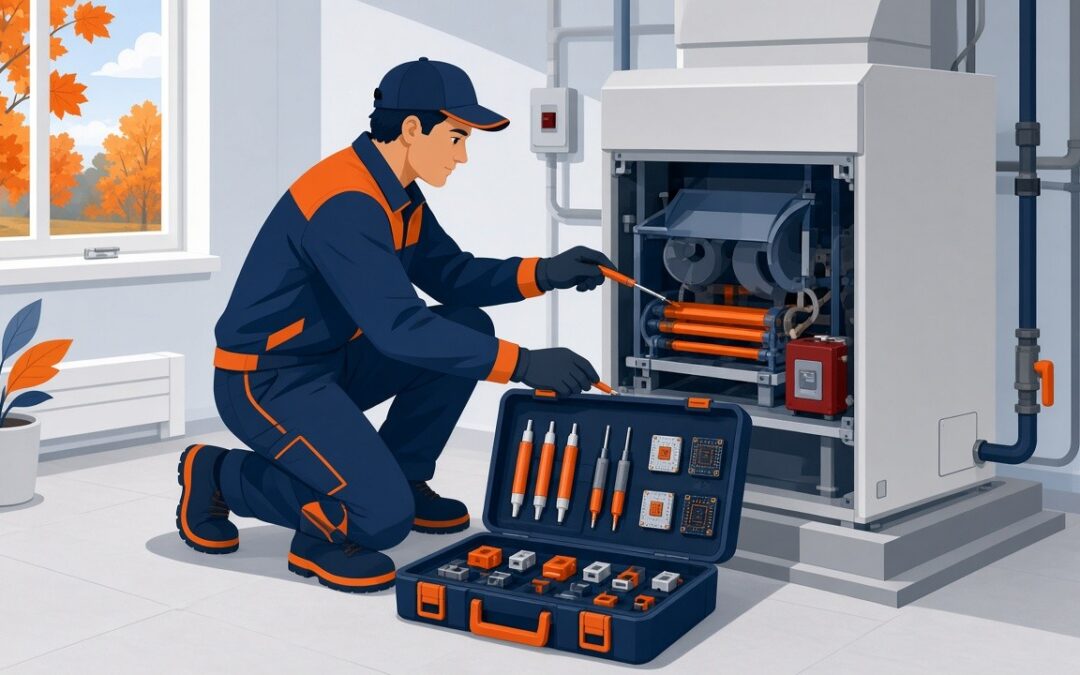
For heating season, an HVAC truck should carry the furnace parts your no-heat calls use most, such as igniters, flame sensors, pressure switches, inducer parts, limit switches, and common controls, along with filters and consumables. Raise their max levels before the first cold snap, and lower summer cooling parts to make room.
The first cold weekend of fall is when furnaces that sat all summer get turned on, and some of them don’t start. No-heat calls come in fast, and they matter to customers. Having the right parts on the truck is the difference between a quick fix and a second visit. We covered the year-round baseline in the HVAC truck starter stock list. This post is the heating-season adjustment.
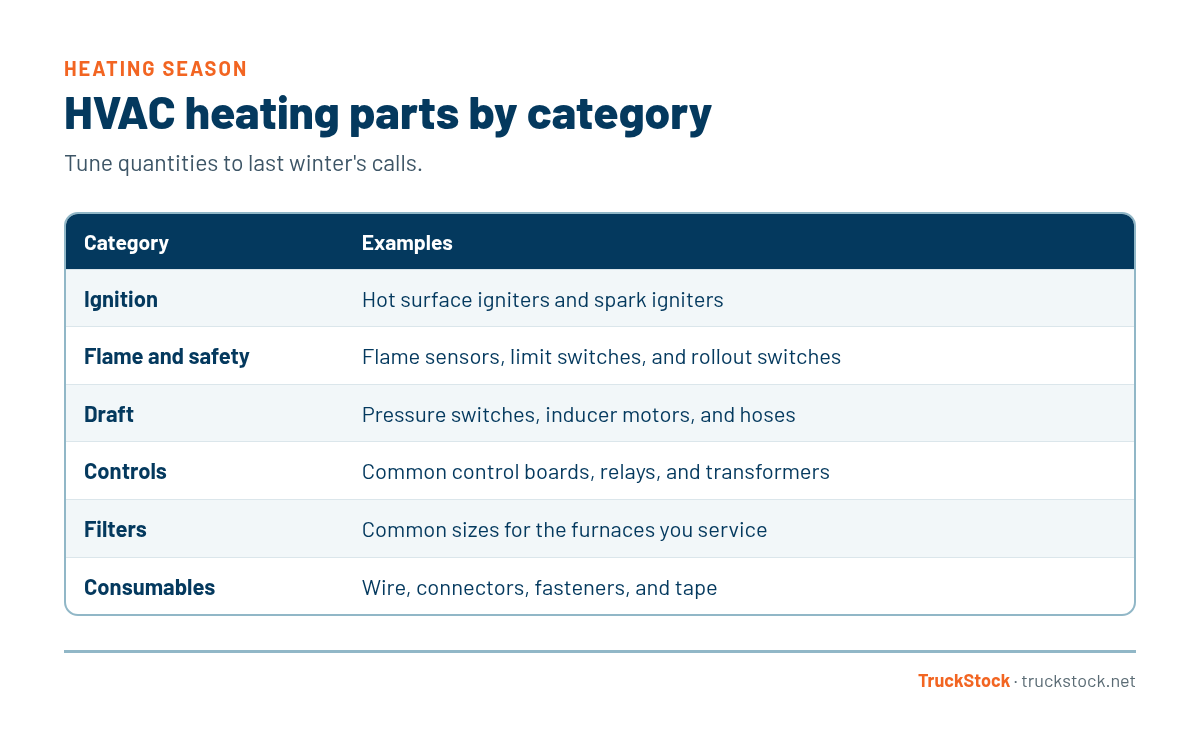
Heating Season Parts by Category
How to Get Ready, Step by Step
1. Look at last winter’s no-heat calls
Pull your heating calls from last season and list the parts used. That’s your best guide to what this season will need.
2. Raise max levels for heating parts
Increase max levels on the heating parts you use most, and lower them on cooling-only parts. Our post on seasonal truck stock explains the approach.
3. Check universal vs. brand-specific parts
Universal igniters and sensors cover many systems. For brands common in your area, a few specific parts may be worth carrying. Keep it to what your techs actually use.
4. Stock the stockroom too
Order heating parts for the stockroom before the season, so trucks can be restocked quickly during the first cold stretch. Supply houses get busy fast. Here’s how to plan stockroom inventory, the same idea in reverse.
5. Prepare on-call trucks
No-heat calls often come at night and on weekends. Make sure on-call trucks have a full heating kit. Our post on handling after-hours calls covers the plan.
Why the First Cold Snap Matters
Heating season tends to start all at once. One week it’s mild, and the next, everyone turns their furnace on the same morning. That first rush tests your truck stock more than any other time of year. Trucks that were stocked for summer will run short on heating parts within days.
Getting ready a couple of weeks early means techs can handle that rush without constant trips to the shop. It also means the stockroom has time to receive orders and restock trucks before demand peaks.
A Quick Example
Picture an HVAC company in late September. The service manager reviews last winter’s no-heat calls and sees igniters, flame sensors, and pressure switches near the top. He raises their max levels on the service truck type, lowers maxes on summer-only parts, and places a stockroom order. Over the next week, every truck is filled to the new levels. When the first cold weekend arrives, techs have what they need on board.
Common Mistakes
- Waiting for the first cold snap to restock heating parts.
- Keeping summer max levels on cooling parts all fall.
- Carrying brand-specific parts for systems you rarely see.
- Forgetting to stock the stockroom, not just the trucks.
- Sending on-call techs out without a full heating kit.
Do Not Forget Filters and Consumables
Heating season brings a lot of maintenance visits along with repairs. Filters in the sizes your customers use, plus wire, connectors, and tape, go fast in the first few weeks of fall. They’re cheap, but running out of them still means a stop at the supply house.
Many companies also run fall tune-ups for heating systems. If yours does, plan for the parts those visits commonly turn up, so a tune-up that finds a weak flame sensor can become a same-visit repair instead of a return trip.
How TruckStock Handles It
- Seasonal max levels. Change max levels on the truck type, and every HVAC truck follows.
- Fill to max. Restock trucks to their new heating-season levels quickly.
- Usage reports. See which parts were used last winter, grouped by part, truck, or supplier.
- Try it with sample HVAC data. The free trial includes sample HVAC trucks and parts.
Key Takeaways
- Use last winter’s no-heat calls to plan.
- Raise max levels on heating parts before the first cold snap.
- Lower cooling-only parts to make room.
- Stock the stockroom as well as the trucks.
- Give on-call trucks a full heating kit.
Frequently Asked Questions
What furnace parts fail most often?
It depends on your area and equipment, but many companies see igniters, flame sensors, pressure switches, and inducer motors near the top. Your own call history is the best guide.
When should HVAC trucks switch to heating stock?
Late September or early October, before the first cold weekend.
Should every HVAC truck carry the same heating parts?
Trucks doing the same work should start from the same list. Install trucks and commercial trucks may need their own.
How do I handle a part the truck doesn’t have on a no-heat call?
Check if another tech nearby has it and transfer it, or use your stockroom plan. Then raise the max if it keeps happening.
Want trucks ready for heating season? Start a free TruckStock trial with sample HVAC data, or contact our team.
Recent Comments