
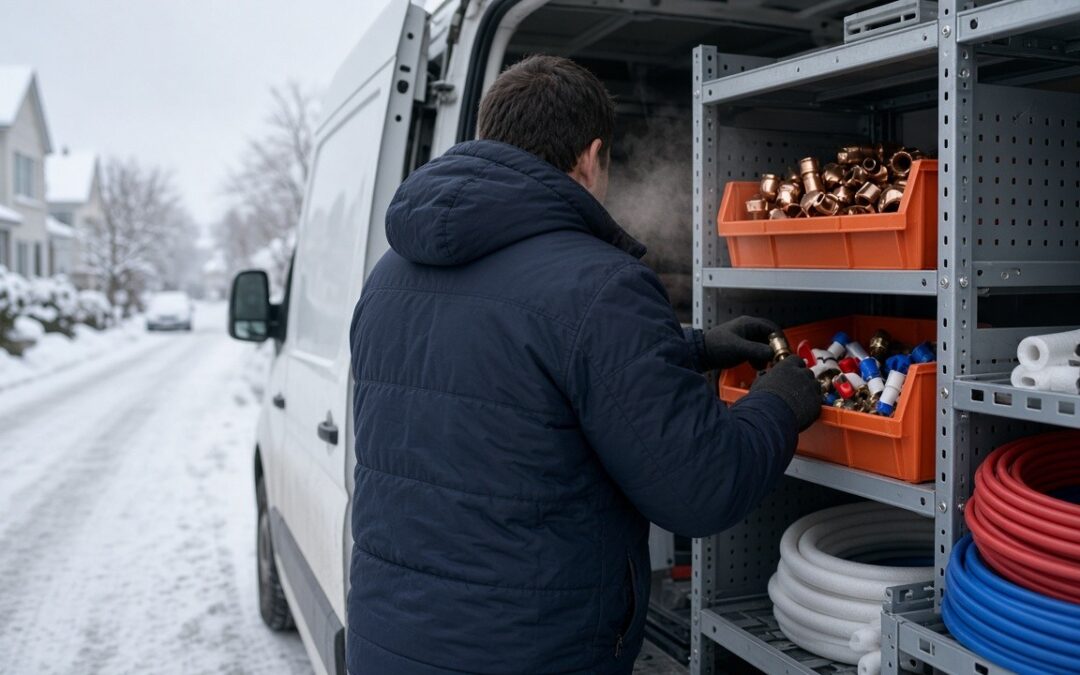
For frozen and burst pipe calls, a plumbing van should carry repair fittings for every pipe material you commonly see, a good supply of shutoff valves and sillcocks, repair clamps for quick temporary fixes, and the supplies to dry and protect the work area. The goal is to stop the leak, make a proper repair, and restore water on the first visit.
Cold snaps bring a rush of calls all at once, and they rarely spread out evenly. When every tech is running burst pipe calls on the same day, the stockroom gets drained fast. That’s why winter stock deserves its own plan, alongside the everyday tactics in our post on plumbing van stock management.
A Winter Stock List for Plumbing Vans
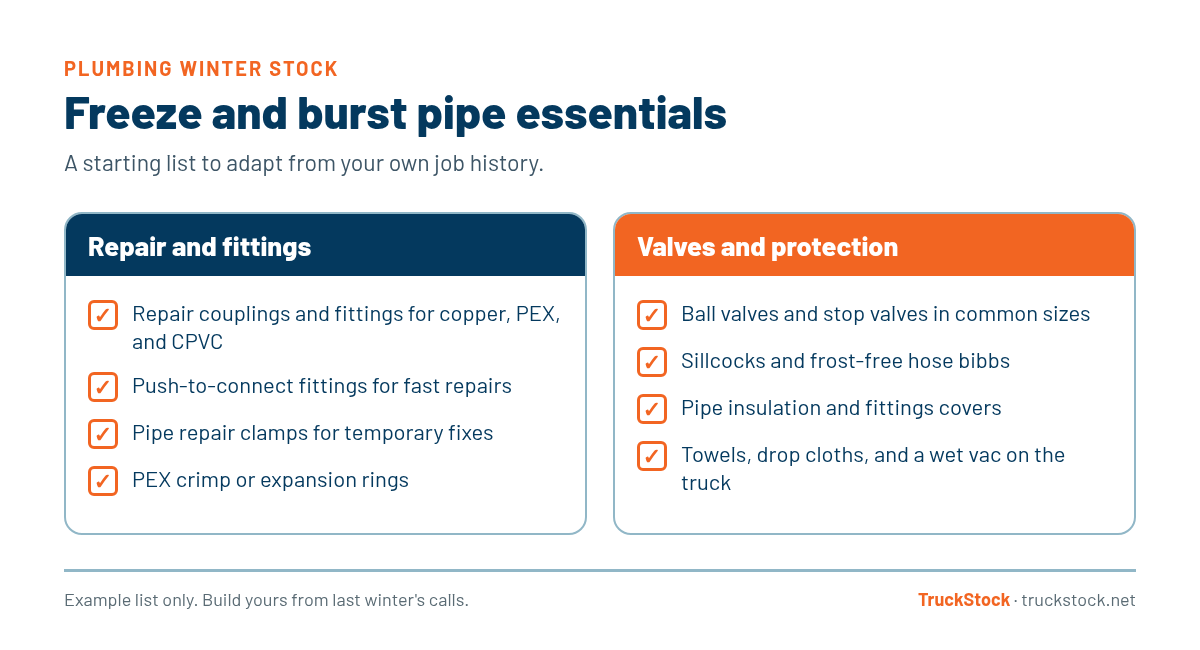
Every market is different, so build your list from your own job history. Here’s a starting point many plumbing shops can adapt:
How to Get Your Vans Ready Before the Cold Hits
1. Look back at last winter’s calls
Pull your job history for last winter and list the parts used on freeze and burst calls. That list is more reliable than anyone’s memory. Our post on why reporting on parts usage matters covers how to use that data.
2. Match fittings to the pipe in your area
If your service area is mostly copper, stock up on copper repair fittings. If you see a lot of PEX or CPVC, make sure every van can repair those too. A van that can only fix one material will send techs back to the supply house.
3. Raise max levels for the season
Freeze calls use more of the same few parts in a short window. Temporarily raising the max on those parts keeps vans from running dry mid-week. Here’s how to set min and max levels, and our post on seasonal rotations covers swapping stock in and out.
4. Stock the stockroom, not just the vans
Vans only hold so much. Make sure the stockroom has enough behind them to refill every van overnight during a cold snap.
5. Restock every night during a freeze
During a cold stretch, daily restocking isn’t optional. Get each van back to its max before the next morning so techs aren’t starting the day short. The routine in how to keep service trucks stocked works well here.
A cold snap also changes how you restock. When calls stack up, it helps to have the stockroom stage each van’s refill at the end of the day so techs can load up quickly the next morning. Small steps like that keep a busy week from turning into a week of supply house runs, which we talked about in our post on reducing trips back to the shop.
Common Winter Stocking Mistakes
- Waiting for the first freeze to start planning, then scrambling at the supply house with everyone else.
- Stocking only one pipe material when your area has a mix of copper, PEX, and CPVC.
- Raising van stock without raising stockroom stock, so the second day of a cold snap still runs dry.
- Forgetting the cleanup and protection supplies that make a burst pipe call go smoothly for the customer.
- Leaving winter max levels in place all spring, which ties up space and money in parts that won’t move until next year.
How TruckStock Handles It
- Seasonal max levels by truck type. Update the max quantities on your plumbing truck type, and every van of that type follows the new levels.
- Fast requests from the job. Techs record the fittings and valves they used from their phones, so the stockroom knows what to pull that night.
- Stockroom checks. When managers fulfill from a stockroom, TruckStock won’t send more than is on hand, and low stock is highlighted so you can reorder before you run out.
- Truck-to-truck transfers. If one van is out of a repair coupling and another has extras, a tech can transfer it and the other tech accepts it, so both counts stay right.
Key Takeaways
- Build your winter list from last winter’s actual calls.
- Carry repair fittings for every pipe material you commonly see.
- Raise max levels on freeze-season parts before the cold arrives.
- Keep enough in the stockroom to refill every van overnight.
- Restock every night during a cold snap.
Frequently Asked Questions
When should plumbing vans switch to winter stock?
Before your first hard freeze, not after it. Use last year’s first freeze calls as a guide and plan to have vans and the stockroom ready a few weeks ahead.
Should every plumbing van carry the same winter stock?
Every van doing the same kind of service work should. Install or specialty vans may need a different list. Keeping service vans consistent makes overnight restocking much faster.
How do I avoid overstocking winter parts?
Raise max levels only on the parts that actually spike in winter, and lower them again in spring. Reviewing usage at the end of the season tells you what to keep for next year.
What should a tech do if the van runs out during a cold snap?
First check whether another van nearby has the part and can transfer it. If not, the stockroom or a supplier is next. Either way, record the part used so it gets restocked that night.
Want to see how seasonal max levels work across a fleet? Start a free TruckStock trial or talk with our team.
Recent Comments