
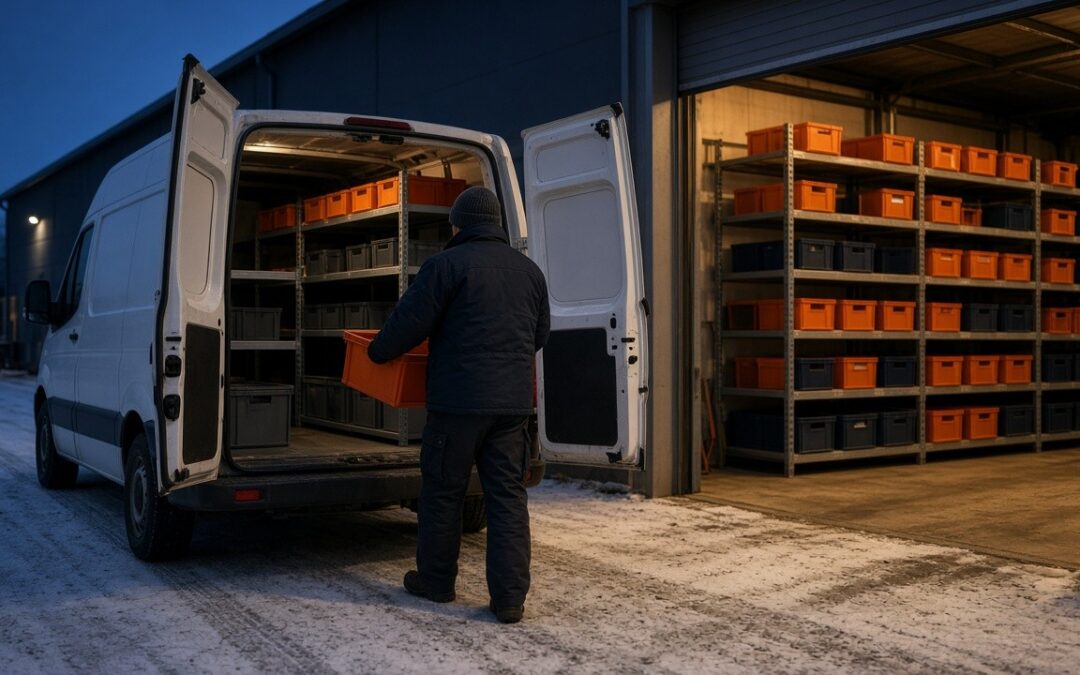
Check every truck before the cold arrives, keep a small buffer of the fastest-moving heating and frozen-pipe parts on the stockroom shelf, and restock every truck every night while the calls keep coming. When one truck runs out mid-day, move the part from a nearby truck instead of sending a tech to the supply house. Then review what ran short.
This week is a good example of why it matters. The weather.com forecast for a possible nor’easter, updated November 10, says daytime highs will drop about 20 degrees from Wednesday to Friday from Chicago to Atlanta, with the first frost, freeze, and snow of the season for millions. AccuWeather says that for nearly every state along and east of the Mississippi River, this weekend will bring the lowest temperatures of the season so far.
The first real cold usually brings a burst of no-heat calls for HVAC shops and frozen-pipe calls for plumbers. Here’s how to keep trucks ready through it.
Why a Cold Snap Is Hard on Truck Stock
- Calls bunch up. A few days of work can land in a day or two, so parts go out faster than your normal restock schedule.
- The same parts run out everywhere. Igniters, flame sensors, and pressure switches fly off every HVAC truck at once.
- Supply houses get busy too. Every shop in town is shopping for the same parts on the same morning.
Five Steps to Keep Trucks Stocked Through the Cold
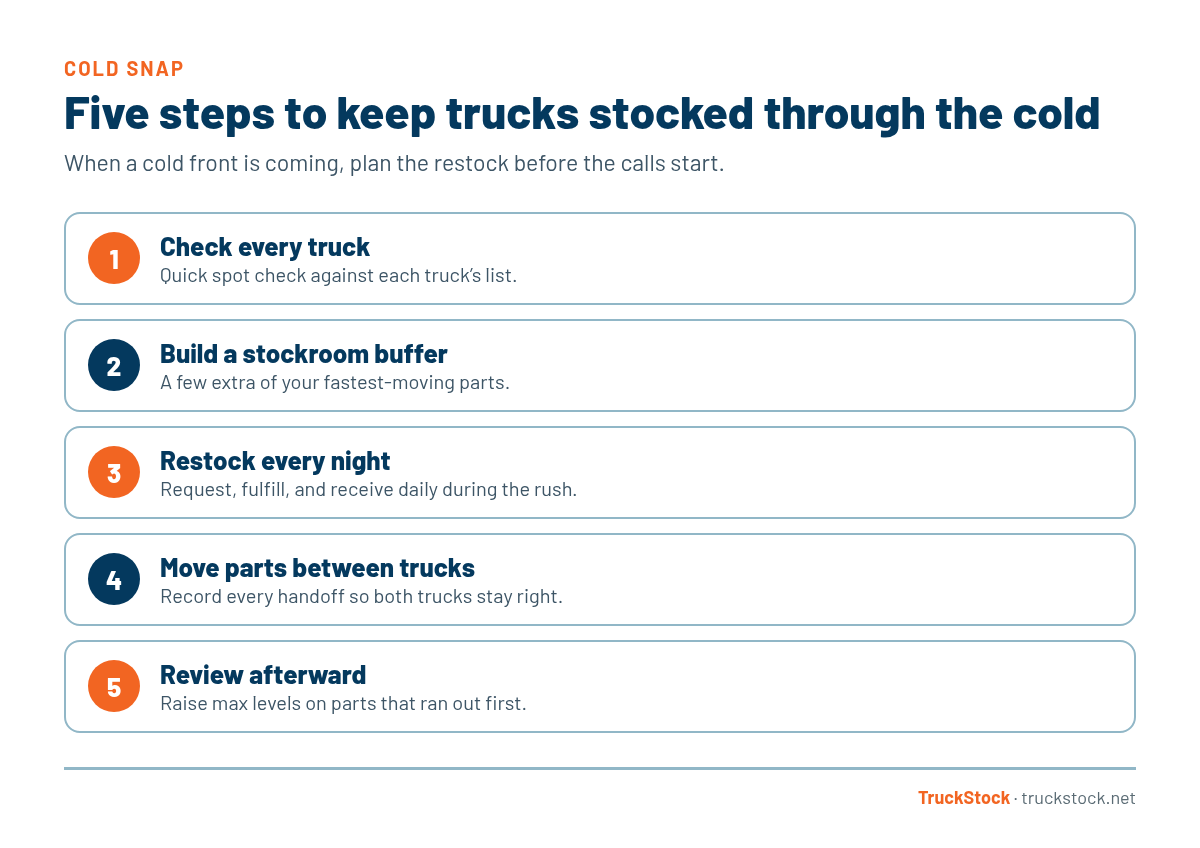
1. Check every truck before the cold arrives
A day or two before the temperature drops, have each tech check their truck against its list and request anything that’s short. If your counts are off, here’s what to do when truck counts don’t match the system.
2. Build a small stockroom buffer
Pull your heating-season usage and stock a few extra of the parts that went fastest, so the stockroom can refill trucks without waiting on a supplier. Our list of what an HVAC truck should carry for heating season and our post on frozen and burst pipe calls are good starting points.
3. Restock every truck every night
If you normally restock weekly, switch to nightly until the calls slow down. Techs submit what they used before they head home, the stockroom fills it, and they receive it in the morning. Here’s more on daily vs. weekly restocking.
4. Move parts between trucks instead of making supply runs
When a tech is short in the middle of a call, check whether a nearby truck has a spare. A quick handoff is usually faster than a trip across town, as long as it gets recorded so both trucks stay accurate. See how to track parts across multiple service trucks, and what to do when the part is missing after hours.
5. Review what ran short afterward
Once things calm down, look at what each truck used and which parts ran out first. Raise max levels on those parts before the next cold front. Our guide to setting min and max levels walks through it.
Parts That Tend to Go Fast in the First Cold
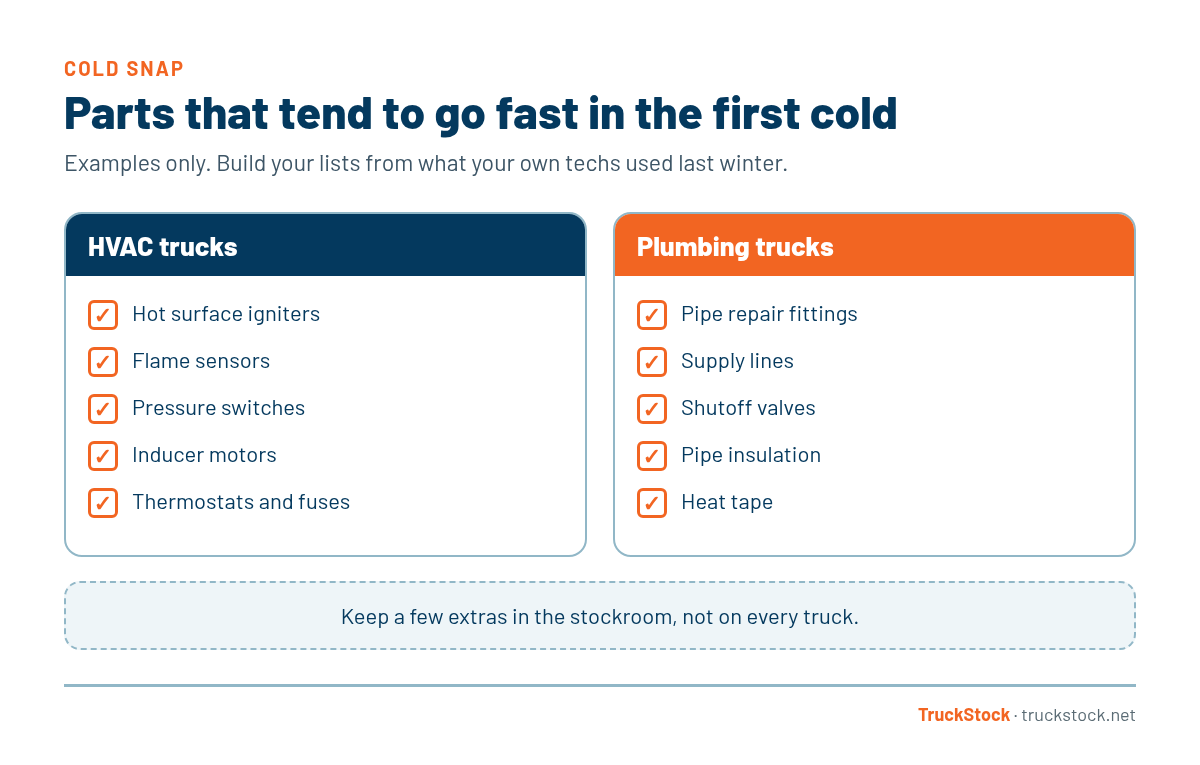
Treat these as examples only. Your own usage from last winter is the best guide to what your trucks need.
A Quick Example
Picture a company with HVAC and plumbing trucks and a cold front two days out. On Wednesday every tech checks their truck, and the office adds a few extra igniters, flame sensors, and pipe repair fittings to the stockroom. Starting Friday, every truck gets restocked overnight. On Saturday, one tech runs out of flame sensors at noon and picks one up from a truck working nearby. The next week, the manager raises max levels on the parts that ran out first.
Common Mistakes
- Waiting until the first busy morning to check trucks.
- Sticking to a weekly restock while trucks empty out every day.
- Letting techs swap parts between trucks without recording it.
- Skipping the review, so the same parts run out next time.
How TruckStock Helps
- Request, fulfill, receive. Techs request what they used from their phone, the stockroom sees it right away, and techs confirm what came back on the truck.
- Transfer Stock. Move parts from one truck to another and keep both trucks accurate.
- Truck types and max levels. Raise a max once and every truck of that type follows.
- Items Requested report. See which parts went fastest, by truck or by part.
Key Takeaways
- Check every truck against its list before the cold arrives.
- Keep a small stockroom buffer of your fastest-moving parts.
- Restock nightly while the calls keep coming.
- Move parts between trucks, and record every handoff.
- Review usage afterward and raise max levels where needed.
Frequently Asked Questions
How far ahead should I prepare trucks for a cold snap?
A day or two is usually enough if your trucks were in good shape going in. If they weren’t, start sooner.
Should I load extra parts on every truck before a cold snap?
Usually not. A small buffer in the stockroom, plus nightly restocking, keeps parts where they’re needed without overloading every truck.
Is it OK for techs to take parts from another truck?
Yes, if it’s recorded. An unrecorded swap leaves both trucks wrong, and the shortage shows up on the next call.
What should plumbers stock up on when temperatures drop?
Frozen and burst pipe calls lean on pipe repair fittings, supply lines, and shutoff valves. Our post on what a plumbing van should carry for frozen and burst pipe calls has a fuller list.
Ready for the next cold front? See what every truck has and what it needs in real time. Start a free TruckStock trial or contact our team.
Recent Comments